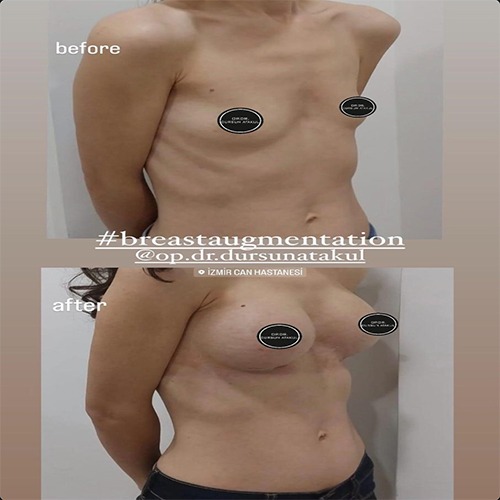
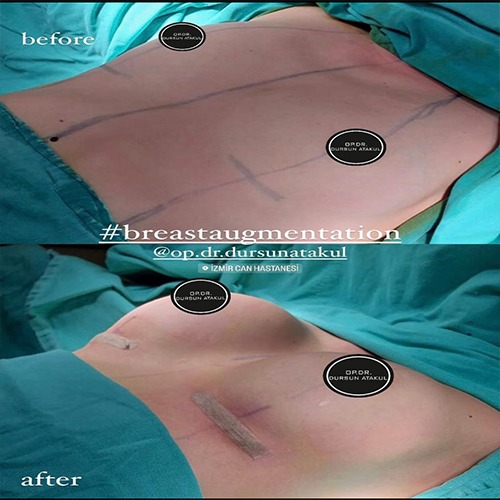
How to prepare for breast augmentation surgery?
Before breast augmentation surgery, the plastic surgeon is discussed with the preferences about the size, feel and appearance. Your surgeon will examine your breast structure and present different types of implants that are flat, textured, round or teardrop-shaped, containing saline or silicone gel, and offer options for surgical techniques that are suitable for you.
If you smoke, it is recommended that you quit before surgery. Apart from this, you should inform your doctor about all the medications you use during your interview. If these drugs contain drugs such as blood thinners or pain relievers, your doctor may ask you to stop them before the surgery. It is important not to eat or drink anything after 12 pm the day before the surgery to prevent complications that may occur during general anesthesia.
Before you decide to have surgery, it is helpful to consider the following:
Breast implants do not prevent your breasts from sagging. To correct sagging breasts, in addition to breast enlargement, you may need a breast lift application called mastopecti.
Breast implants are not guaranteed to last a lifetime. Although the lifetime of the implant used is different, the average duration is 10 years. Implant rupture, which is called rupture or leakage of the implant inserted after the implant is inserted, is a rare condition. In addition, the weight gained or lost after surgery may cause a change in the appearance of the breasts. However, breasts will continue to change with age. Such problems should raise the possibility of surgical intervention in the future.
Interpreting mammogram results will be more difficult. If you have breast implants, you may need special tests in addition to routine mammograms.
Your health insurance does not cover breast implants. Some insurances may cover breast augmentation surgery after mastectomy, which is medically necessary and requires complete removal of the breast after cancer. Apart from this, breast augmentation operations are not covered by insurance in cases where it is not medically necessary. You must be prepared to bear all costs, including related surgeries or future imaging tests.
Patients can stay in the hospital for one night or return home the same evening, according to the doctor’s advice or personal wishes. In some cases, it may be necessary to place a drain on the breast tissue. Drains can be easily removed without surgical intervention, usually the next day. It is not recommended to drive for 1 week after breast augmentation.
Breast augmentation operations are almost always performed under general anesthesia. However, sometimes breast augmentation surgery can be performed under local anesthesia with a mild sedative given. The operation takes approximately 1-2 hours.
How is breast augmentation performed?
To insert the breast implant, your surgeon may make a single incision (incision) in one of three possible locations:
In the crease under your breast (inframammary)
Under your arm (axillary)
Around your nipple (periareolar)
After the incision is made, the surgeon will separate your breast tissue from the muscles and connective tissue of your chest. This creates a pocket behind or in front of the outermost muscle of the chest wall (pectoral muscle). The surgeon will place the implant in this pocket and center it behind the nipple.
Saline implants are placed empty and then filled with sterile saline after placement. Silicone implants are pre-filled with silicone gel.
After the implant is in place, the surgeon will close the incision (the incision he made) with sutures and bandage it with skin glue and surgical tape. Choosing the incision site is important to minimize scar formation.
What happens after the operation?
Pain and swelling may occur several weeks after surgery. Bruising may be observed. Scars fade over time, but may not completely disappear.
While healing, it is necessary to wear a compression bandage or sports bra to provide extra support to the breast implants and maintain their positioning. Your surgeon will recommend the bra needed. Pain control can be easily controlled with painkillers prescribed by our physician.
You should carefully follow your surgeon’s instructions about returning to your routine life. If you don’t have a physically demanding job that requires your body to work actively, you can return to work in a few weeks. You should avoid strenuous activities that raise your heart rate or blood pressure for at least two weeks. As you heal, remember that your breasts will be sensitive to physical contact or jerking movements.
If your surgeon has used non-absorbable sutures (stitches) or has placed drainage tubes near your breasts, you will need a follow-up appointment to have it removed.
on your chestIf you notice warmth, redness, or a fever, you may have a surgical infection. In such a case, you should contact your surgeon as soon as possible. Likewise, in cases of shortness of breath or chest pain, a surgeon should be consulted without delay.