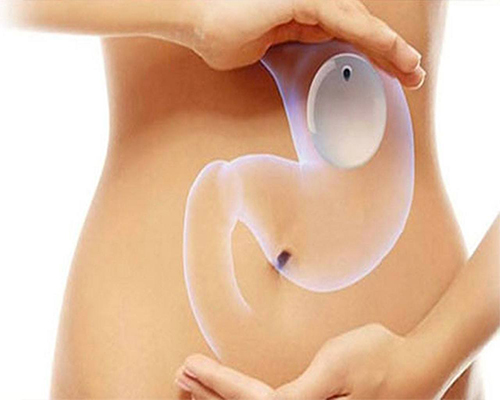
When we consider obesity as a common disease of the modern age, gastric balloon applications are a frequently preferred treatment method in the treatment of overweight and obesity. It is especially preferred by individuals who are inconvenient to receive anesthesia or who do not want a surgical procedure.
Depending on the type of gastric balloon, it stays in the stomach for 4 to 12 months. With the feeling of satiety and satiety it gives during this period, it makes it easier for the person to comply with his diet by limiting food intake. Nutritional style and eating habits change. After the balloon comes out of the stomach, the person maintains these habits and maintains his ideal weight.
It provides an advantage in the treatment of obesity because it is a reversible application and can be reapplied.
TYPES OF STOMACH BALLOON
Gastric balloons all have the same basic mechanism of action. However, the method of application can be varied according to features such as the duration of stay in the stomach, whether it is adjustable or not.
Fixed volume balloons
Fixed volume balloons are inflated 400-600ml during the first insertion and their volume is not changed afterwards. They stay in the stomach for 6 months. At the end of 6 months, it is removed again with sedation and endoscopy. Medsil™ or Bariglobe Balloon are examples of these balloons.medsil balloon picture
There is no need for any endoscopy procedure for the Allurion swallowable gastric balloon, which is one of the fixed volume balloons. The special valve on the balloon is opened at the end of 4 months, and the balloon deflates and is expelled spontaneously through the intestine. Re-endoscopy is not required for removal.
Elipse swallowable gastric balloon photoYou can find detailed information about the Allurion balloon in the swallowable gastric balloon section.
Adjustable gastric balloon
The difference of the adjustable gastric balloon from the fixed volume balloon is that its volume can be adjusted according to the need while in the stomach. This type of balloons are inflated 400-500 ml after placing them in the stomach.
In the next process, the amount of liquid can be increased or decreased from the filling tip, which is located at the end of the balloon and is taken out when necessary, depending on the patient’s weight loss status. Spatz 3 adjustable balloons are examples of these balloons.
Except for the Allurion swallowable gastric balloon, the patient is put to sleep with the sedation method during the placement of the gastric balloon. Sedation is a lighter method of anesthesia than general anesthesia in which the patient is asleep. There is no need for auxiliary equipment for breathing. Therefore, it should not be confused with general anesthesia. The risk is much less.
WHO CAN BE APPLIED TO THE STOMACH BALLOON?
Gastric balloon is an obesity treatment method that has been used for a long time, in which 10 to 15% of their weight can be lost in 4-6 months. It can be applied to individuals with a body mass index of 27 and above, between the ages of 18-70, who have not had bariatric surgery before. In addition, gastric balloon is an alternative treatment method for those who do not want to have a surgical operation (such as tube stomach surgery) for those who have an inconvenient disease (Allurion gastric balloon).
However, it is very important to change and protect the nutrition and lifestyle that the person will continue with the balloon in the future so that the weight lost with the gastric balloon is not regained in the future.
IN WHICH CIRCUMSTANCES IS THE GASTAL BALLOON NOT SUITABLE?
Gastric balloon is not suitable in some cases. At the beginning of these situations, reasons such as stomach-related ulcer reflux and large gastric hernia come. In addition, the application is not suitable for patients who have had bariatric surgery before, those who are pregnant or who want to become pregnant, those who are addicted to alcohol, those who have psychological disorders and those who have problems in the esophagus and esophagus.
HOW IS THE STOMACH BALLOON INSTALLED?
Image of how the gastric balloon is placed in the stomach. Endoscopy and capsule shown.
As mentioned, the gastric balloon is a deflated flexible material made of silicone or polyurethane material. It is inserted into the stomach in an uninflated state through the mouth and esophagus (depending on the type of balloon chosen) with the help of a thin flexible tube with a camera and light at the end, called endoscopy.
In the meantime, light sedation is applied so that the patient does not feel any pain or pain. If endoscopy and sedation are to be performed for the placement of the balloon in the stomach, a specialist anesthesiologist is also present during the application.
No sedation or endoscopy is required for the Allurion Elipse gastric balloon, which has been developed with technological advances.
Before the deflated balloon is placed in the stomach, the condition of the stomach is checked by endoscopy whether it is suitable for the balloon. No food should be consumed for the last 6 hours before the balloon is placed.
After the balloon is placed in the stomach, the balloon is inflated with 400-600 ml of isotonic sterile saline to be approximately the size of a grapefruit. The volume of an average stomach is around 1-1.5 liters. Gastric balloons can be filled up to 800 ml, but how much the balloon will be inflated is decided by the doctor considering some criteria.
The color of the water was changed to blue with methylene blue. Thus, if there is a hole or leak in the balloon, your urine will turn blue. In this case, the interest of the bubble
Please consult your doctor immediately. It will be removed from the stomach by endoscopy.
The total processing time is as short as 20 minutes.
WHAT ARE THE ADVANTAGES?
It can be fitted in a very short time under hospital conditions.
After the gastric balloon application, the person can return to his normal life without the need for hospitalization.
It is very easy and painless to apply.
It can be removed whenever the patient wants.
LIFE AFTER INSTALLED GASBALOOM
It is worth noting that your stomach will try to digest the gastric balloon, but because it is indigestible, cramping, nausea and vomiting will occur during the acclimatization process. These symptoms last 3 to 7 days, varying from person to person, and then disappear. Your doctor will prescribe the necessary drugs so that you can get through this process easily.
It should not be forgotten that the gastric balloon is a start for you to lose weight. It is very important that you maintain this by making changes in your lifestyle and eating habits in the next steps. You will need to follow the diet given to you and turn it into a diet in the future.
It is normal to feel discomfort such as nausea immediately after the gastric balloon is inserted. This may take a few days or up to a week. Depending on the severity of these ailments, your doctor will prescribe medication.
In the first two weeks, most patients state that they feel completely full. Some patients may experience nausea after eating a meal. Significant weight loss is seen in this 2 week period.
In 3-6 weeks, the appetite is gradually restored, but it can be satisfied with very little food. In this process, it should be followed to eat slowly and whether any discomfort is felt after the meal. Meals should be scheduled and deliberate. Complaints such as hiccups, stomach reflux and nausea are usually seen when eating fast and a lot.
7-12. Weight loss continues for weeks. However, it is less than the first 8 weeks. In this period, it is important to continue to make efforts to establish diet and exercise methods as a lifestyle for weight loss.
DISADVANTAGES OF GASTAL BALLOON
Reflux can be seen after gastric balloon.
Nausea and vomiting may occur in the first 3-7 days.
Stomach cramps may occur in the early stages.
The application is temporary. After removal, you need to maintain the nutritional habits and lifestyle that you gained life. If you do not follow your diet, it is likely to gain weight again.
The amount of weight lost is less than surgical methods (such as tube stomach surgery).
In very rare cases, it can cause stomach ulcers.